How U.S. Law Firms Can Audit Their AI Drafting Pipelines
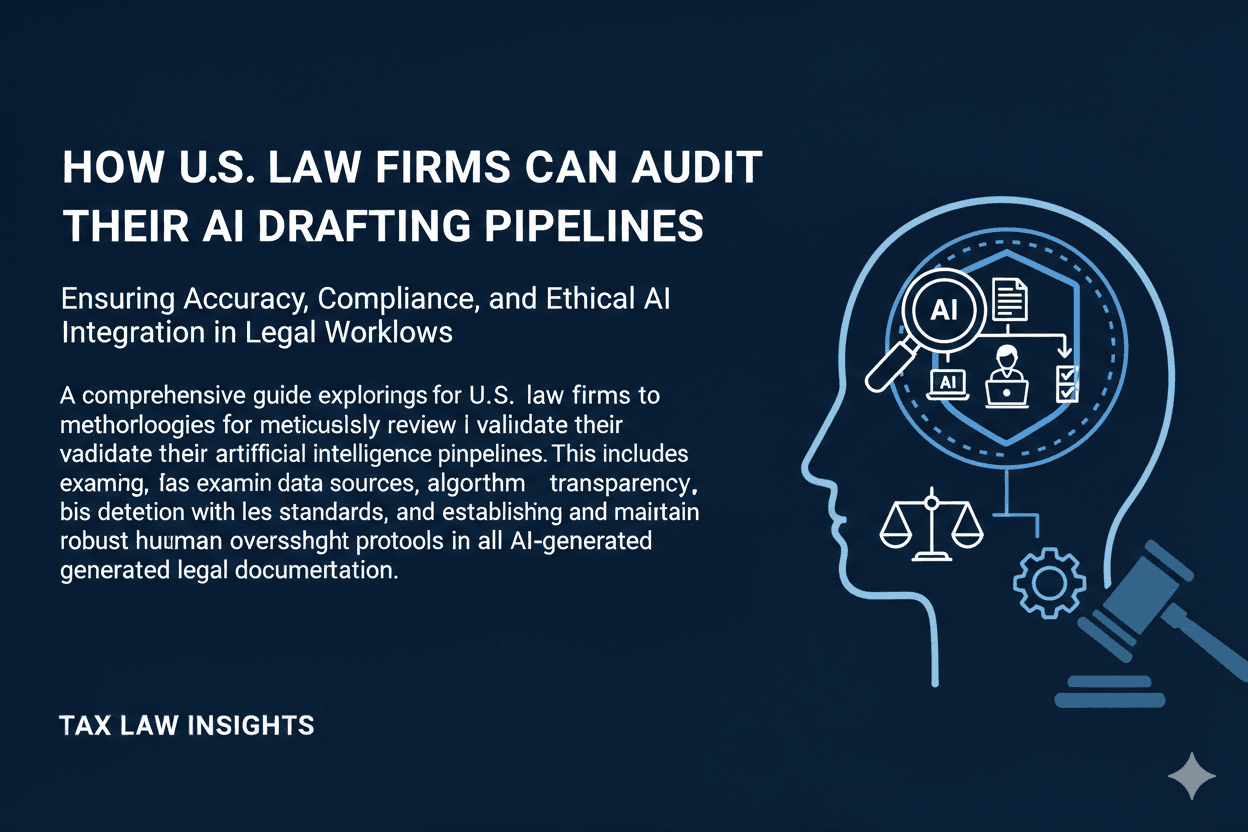
When Speed Meets Scrutiny in Legal Drafting
By 2025, AI-assisted tools have become a common part of legal drafting across the United States, with a majority of lawyers now using AI for tasks such as drafting motions, contracts, and internal memoranda, according to recent industry and legal operations reports. What began as a time-saving advantage has also introduced new risks. Courts across the U.S. are increasingly scrutinizing AI-generated filings following documented cases involving fabricated citations, formatting violations, and failures in human oversight. For individual lawyers, the question is no longer whether AI can be used—but how its output is reviewed, controlled, and validated. As a result, an AI drafting audit for law firms has quickly become a professional necessity rather than a technical luxury.
A Quiet Shift Inside U.S. Law Offices
AI didn’t arrive loudly in U.S. law firms—it entered quietly through practical tools like contract review platforms, drafting assistants, and citation generators designed to save time on routine work. Solo attorneys and small practices were among the earliest adopters, using these tools to compete with larger firms on speed, cost efficiency, and turnaround time. At first, AI was limited to support tasks. But as it began generating more substantive legal language—motions, pleadings, and contractual clauses—new risks surfaced.
Judges started asking pointed questions about the accuracy and origin of AI-generated filings. Bar associations responded by issuing guidance that reaffirmed attorneys’ non-delegable duties of competence, supervision, and verification. Lawyers across the U.S. soon recognized that unchecked AI output could expose them to malpractice claims, ethical violations, and reputational harm. In this environment, auditing AI drafting pipelines has emerged as a practical safeguard—allowing modern lawyers to maintain efficiency while protecting their professional standing.
What Is an AI Drafting Pipeline in a Law Firm?
An AI drafting pipeline in a law firm is the structured workflow that governs how AI tools are used to generate, review, and finalize legal documents. It is not a single program but a coordinated process that combines technology with human oversight. Typically, AI generates initial drafts for motions, contracts, or pleadings, which are then reviewed by paralegals or attorneys to verify citations, formatting, and substantive accuracy. The process also includes compliance checks to ensure filings meet court rules, local procedures, and ethical obligations. Understanding the pipeline is crucial because it identifies where risk lies, where audits are necessary, and how human accountability interacts with AI-generated output. Without this framework, firms risk submitting drafts that are inaccurate, incomplete, or ethically problematic.
Why AI Drafting Audits Are Essential for U.S. Law Firms
By 2025, AI tools have become deeply integrated into legal drafting workflows, assisting attorneys with motions, contracts, pleadings, and internal memoranda. While these tools save time and improve efficiency, they also introduce significant risks. Courts across the United States are increasingly scrutinizing AI-generated filings, and attorneys remain fully responsible for every submission. The American Bar Association has reinforced that the duties of competence, supervision, and confidentiality, as outlined in Model Rules 1.1 and 5.3, apply equally to AI-assisted work.
Unreviewed AI-generated documents can contain fabricated citations, misapplied statutes, formatting errors, and inadvertent disclosure of confidential client information. Surveys and legal operations studies indicate that a substantial portion of AI-assisted drafts, when left unchecked, fail to meet court-specific requirements or jurisdictional standards. For individual lawyers, these risks are not theoretical; courts now expect human verification of AI output, and failure to comply can lead to sanctions, malpractice claims, or reputational damage.
A structured AI drafting audit addresses these risks systematically. It evaluates where AI is used, examines the quality and accuracy of its output, and ensures that human oversight is consistently applied. By implementing such audits, law firms can maintain efficiency, demonstrate professional diligence, and protect both clients and their own credibility. Auditing AI drafting pipelines has therefore become an essential component of responsible legal practice in the United States, transforming potential liabilities into controlled, manageable workflows.
Inside an Effective AI Drafting Audit Framework
Auditing AI legal workflows is not about banning tools—it is about structuring their use responsibly. The most effective audits focus on process rather than technology, ensuring that AI supports legal work without replacing professional judgment.
A sound AI drafting audit typically evaluates where and how AI is used across the drafting lifecycle, including which documents are AI-generated versus human-drafted, whether state and federal laws are applied accurately, and whether filings comply with court-mandated formatting and citation rules. It also examines where attorneys or paralegals intervene to validate AI output and how drafting errors are tracked and corrected over time.
Industry reports and legal operations studies consistently show that firms with structured review frameworks experience fewer drafting errors, faster turnaround times, and greater consistency—without increasing professional risk. For individual lawyers managing heavy caseloads, an audit provides clarity and control: AI assists, but humans decide.
Real Case Study: Mata v. Avianca and the Cost of Unverified AI Drafting
In Mata v. Avianca, Inc. (S.D.N.Y.), two New York attorneys submitted a federal court brief containing six non-existent case citations that were later confirmed to have been generated by an AI tool. In its 2023 decision, the court found that the cited authorities fabricated and sanctioned the attorneys, imposing monetary penalties and requiring disclosure to their client, their law firm, and other courts where they had pending matters.
What mattered most to the court was not the use of AI itself—but the failure to verify AI-generated output. The judge emphasized that attorneys have a non-delegable duty to confirm the accuracy of citations and legal authority before filing. The Mata decision continues to be referenced in judicial training materials and bar association discussions through 2024 and 2025 as a cautionary example: AI without review is a liability. It remains one of the clearest, verifiable demonstrations of why an AI drafting audit for law firms is essential.
From Policy to Practice: Implementing AI Audits Without Slowing Work
For individual lawyers, AI audit implementation must remain practical. The most effective audit frameworks rely on layered responsibility rather than additional bureaucracy, ensuring oversight without disrupting daily workflows.
Many U.S. law firms now adopt a hybrid drafting model that combines task-oriented AI drafting tools to generate structured, court-compliant documents, human paralegals to validate substance, citations, formatting, and exhibits, and attorney review focused on legal strategy and professional judgment. In this structure, AI manages repetitive elements such as formatting, tables, hyperlinking, and templates—while legal professionals verify accuracy, tone, and compliance with court rules.
Firms that follow this layered approach commonly experience fewer drafting errors, more consistent filings, and smoother review cycles, without sacrificing efficiency. The objective is not to add work, but to create better-controlled drafting workflows where AI supports productivity and human oversight protects credibility.
Role of Legal Process Outsourcing (LPO) in AI Audits
Legal Process Outsourcing providers play an increasingly important role in AI auditing for law firms. LPO teams can manage initial AI-generated drafts, ensuring they are structured, formatted, and aligned with court-specific templates. Human paralegals within LPO teams validate the substance, citations, and compliance before attorney review. By standardizing workflows across clients or practice areas, LPOs ensure consistent audit quality and maintain comprehensive documentation that demonstrates verification and corrective actions. For small practices or solo attorneys, integrating LPO expertise allows firms to scale AI audits efficiently while maintaining accuracy and compliance.
Practical Guide: Your AI Drafting Audit Toolkit
Implementing an AI drafting audit requires practical, actionable tools that individual lawyers and small firms can use immediately. An effective approach begins with mapping where AI is deployed across the drafting workflow to understand which documents, sections, and tasks rely on AI-generated output. Every draft produced by AI should then undergo a mandatory human review, ensuring that citations are accurate, formatting adheres to court rules, and legal arguments comply with jurisdictional requirements.
In addition, law firms should maintain court-specific templates that are aligned with local procedural rules, preventing common errors and ensuring consistency across filings. Error logs are also essential; they track the types of mistakes AI produces and help refine prompts, improving future output while minimizing risk. When applied systematically, this toolkit not only protects against sanctions and compliance failures but also transforms AI into a reliable, productivity-enhancing partner. For solo practitioners and small practices, it offers a scalable framework that balances speed, accuracy, and professional accountability, allowing lawyers to harness the benefits of AI without compromising legal or ethical standards.
Common Pain Points—and How Audits Solve Them
For individual lawyers, several challenges consistently surface when AI is introduced into legal drafting workflows. Concerns about court sanctions are addressed through mandatory verification layers that ensure all AI-generated content is reviewed before filing. Formatting rejections, a frequent source of delay and frustration, are reduced through court-rule-specific templates aligned with local requirements. Time pressure is eased by allowing AI to handle document structure while paralegals focus on substance and compliance.
A well-designed AI drafting audit addresses all three issues simultaneously—without sacrificing speed—by bringing structure, accountability, and consistency to the drafting process.
FAQs: AI Drafting Audits for Law Firms
- Is using AI for legal drafting allowed in the U.S.?
Yes. U.S. law firms and individual attorneys may use AI tools for legal drafting, research, and document preparation. However, ethical rules make clear that attorneys remain fully responsible for the accuracy, completeness, and legal validity of all AI-assisted work. AI does not replace an attorney’s duty of competence, supervision, or professional judgment, and every AI-generated draft must be reviewed before submission.
- Do courts require disclosure of AI use?
In some jurisdictions, yes. Several federal and state courts have adopted local rules or standing orders requiring attorneys to disclose the use of AI or certify that any AI-generated content has been reviewed and verified by a human. Even where disclosure is not expressly required, courts expect attorneys to ensure filings comply with all procedural, formatting, and ethical obligations.
- How often should AI drafting audits be conducted?
As a best practice, AI drafting audits should be conducted at least quarterly. More frequent reviews are recommended when new AI tools are introduced, court rules change, or errors are identified. Regular audits help ensure continued compliance, reduce drafting risks, and keep workflows aligned with evolving legal and regulatory expectations.
2025 Regulatory Updates Lawyers Must Know
By 2025, courts across the United States have continued to address the use of artificial intelligence in legal filings. Several federal and state courts have issued local rules, standing orders, or judge-specific requirements requiring attorneys to certify that AI-generated content has been reviewed and verified by a human before submission. These requirements vary by jurisdiction but reflect a broader judicial emphasis on accountability and accuracy.
During the same period, the American Bar Association has issued updated guidance clarifying how existing ethical duties—particularly competence, supervision, and confidentiality—apply to the use of AI tools. While formal AI audits are not explicitly mandated by statute or rule, these developments make structured oversight and documentation increasingly necessary for attorneys seeking to demonstrate compliance and manage professional risk.
Looking Ahead
AI is now firmly embedded in legal drafting, but professional accountability remains entirely human. For individual lawyers, the question is no longer whether AI can improve efficiency, but whether its use can be defended in court, justified to clients, and aligned with ethical obligations. A well-designed AI drafting audit for law firms provides that assurance. By clearly defining where AI is used, enforcing human review, and documenting compliance with court and ethical standards, lawyers can harness innovation without compromising accuracy, credibility, or trust. In an environment of increasing judicial scrutiny, auditing AI-assisted drafting is not about slowing progress—it is about practicing law responsibly in a technology-driven era.