From Discovery to Drafting: Which Paralegal Tasks Should Be Automated First?
Automation at Your Doorstep
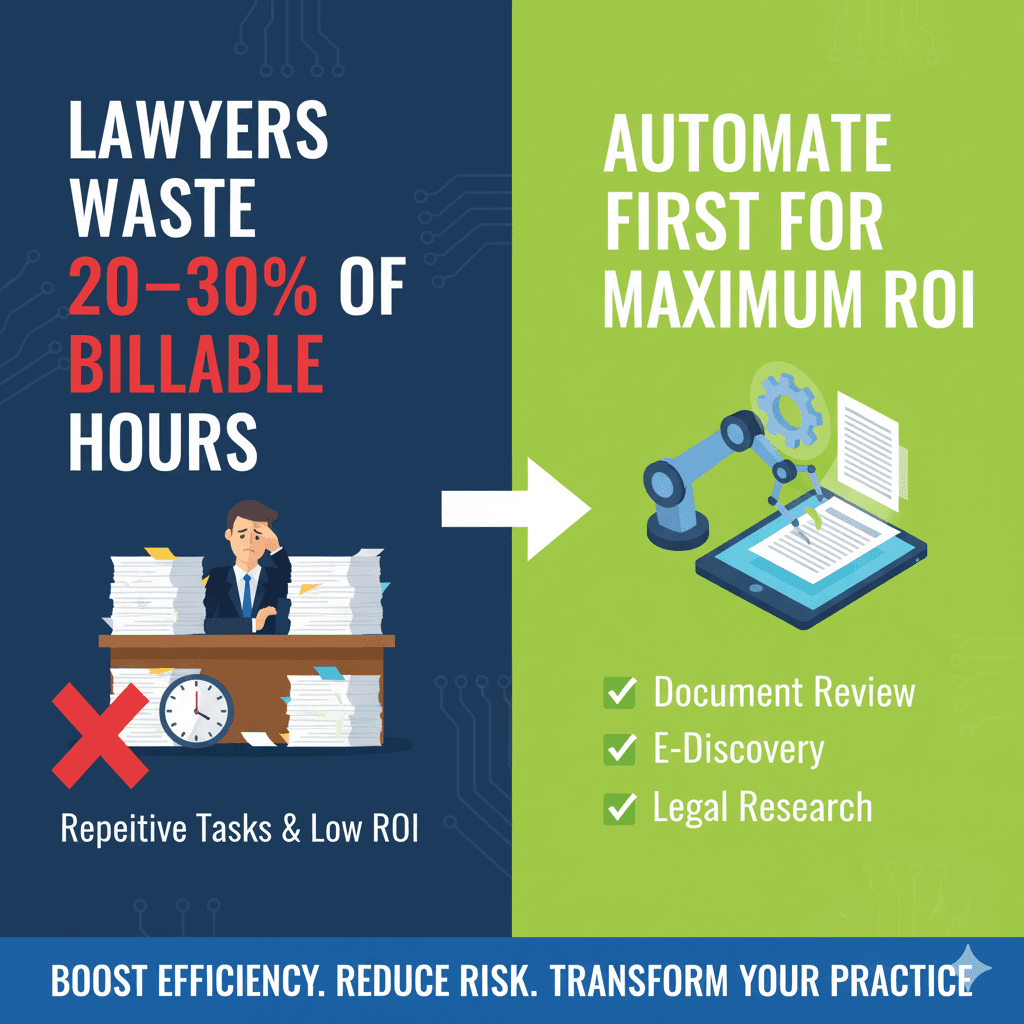
Did you know that lawyers now waste up to 20–30% of their billable hours on repetitive administrative tasks? Modern legal-technology studies reveal that firms embracing automation saw up to 25% faster case turnaround in 2024. For individual attorneys still managing their own paralegal workflows, the question becomes urgent: which paralegal tasks should you automate first to free up time and reduce risk? In this article, we walk you from discovery to drafting — guiding you through prioritized automation, lessons from real firms, and actionable steps you can deploy today.
Introduction: A Tale from a Solo Practitioner
Consider "Attorney Morgan," a solo practitioner in Ohio. In 2023, she found that drafting, formatting, and filing documents consumed nearly half her workweek. After integrating a document automation tool, she freed up 10 hours weekly for deeper client work — and saw a 15% revenue uplift in six months. That transformation hinged on choosing the right tasks to automate first. This narrative isn't unique: as law firms increasingly adopt AI-assisted paralegal tools, the biggest gains come from ordering your automation journey wisely. In 2025, with legal-tech maturity rising, arriving at that "first win" is more possible than ever. We'll show you how to pick the low-hanging fruit — starting from discovery and working toward drafting.
Why Discovery-Phase Tasks Are Prime for Automation
The Scale of the Automation Opportunity
In 2025, legal professionals report that 64% of law firms already use AI tools for document drafting, client intake, or research tasks. Technology and practice reports also confirm that internal document workflows such as tagging, version control, and compliance checking are now routinely automated across firms. The discovery stage — document collection, basic review, issue tagging — is rife with repetition and pattern recognition, making it ideal for early automation.
From Chaos to Clarity: Streamlining Discovery with Automation
Here's how to break it down:
- Bulk document ingestion & indexing: Automate the intake of client-provided documents (e.g. emails, PDFs) and classify by type (contracts, correspondence, financials). Many legal automation platforms already support this.
- Keyword and issue tagging: Use NLP (natural language processing) to flag common issues (jurisdiction, contract clauses, notice provisions). This saves paralegals manual scanning.
- Consistency checks & redaction: Redaction and consistency verification (e.g. ensuring all exhibits are labeled) follow strict rules — making them ideal for rule-based automation.
- Preliminary privilege filtering: Automating first-pass filtering for privilege can free paralegals to focus on grey-area decisions, not rote filtering.
These steps relieve significant cognitive load. In surveys, paralegals often cite document overload and time spent on indexing or formatting among their top pain points. Automating discovery tasks reduces hours wasted on minutiae and cuts risk by standardizing processes. Moreover, automation at this stage lays a clean foundation for drafting later — the better-structured your data, the more reliable your automated or semi-automated drafting becomes.
Bridging Discovery to Drafting: Automation That Earns Real ROI
Why You Automate Drafting Next
Once discovery-output is organized and tagged, drafting becomes the logical next frontier. In fact, many legal-tech frameworks project that automating drafting plus templating can yield the highest ROI — often 2–3x greater than automating pure admin tasks. As the Virginia State Bar's 2025 "Future of Law" report notes, automation of document workflows is accelerating, but real gains come in bridging structured inputs into compliant drafts.
Expert Perspectives & Frameworks
Legal tech analysts observe a three-tier framework for drafting automation:
- Template + variable binding: Predefined templates with "fill-in-the-blanks" logic (for contracts, notices, demand letters).
- Clause assembly & logic branching: Smart templates choose among clauses based on input flags (e.g. jurisdiction, risk level).
- Full draft recommendation + human review: AI suggests entire drafts which the human edits, cites, and finalizes.
In a case study, a mid-sized firm in Texas automated its lease-drafting process via clause assembly. After six months, average drafting time dropped by 40%, and error rates in formatting dropped by 70%. The team reinvested that saved time into client outreach and business development.
Addressing Attorney Pain Points
- Formatting risk: A first-pass draft generator reduces formatting errors; humans still finalize.
- Citation accuracy: By binding known authority footnotes or cross-references, you lower missed citations.
- Scalability across document types: Once the "template + logic" layer is built, you can scale to multiple contracts, motions, or pleadings.
The trick is to build incrementally — don't try to automate the most complex pleading from day one. Instead, start with demand letters, NDAs, or common motions. These yield predictable patterns and let you validate your rules and logic before extending automation deeper.
Implementation Roadmap & Best Practices
Step-by-Step Implementation
- Audit your workflow: Map out every paralegal task you currently perform (discovery tasks, indexing, drafting, proofreading). Flag high-volume and repetitive tasks.
- Pilot a discovery automation tool: Begin with ingestion, tagging, and redaction. Evaluate accuracy and adjust rules.
- Define templates and logic rules: Collaborate with your paralegal or senior associate to encode drafting rules, branching logic, formatting constraints.
- Integrate human review loops: Let your human paralegal review or correct the draft. That feedback trains the system and builds trust.
- Measure KPIs and iterate: Track time saved, number of revisions, error rates. Iterate and expand.
Overcoming Common Challenges
- Resistance to change or distrust: Start small; show wins and let the system's accuracy build confidence.
- Data quality issues: Garbage in (poorly scanned or mislabeled docs) leads to garbage out; invest in clean ingestion.
- Complex exceptions: Automate only what is reliable; leave high-judgment edge cases to humans.
Forward-Looking Trends & Juris LPO Synergies
As agentic AI systems evolve, legal agents can autonomously complete multi-step tasks (e.g. intake → draft → file) with minimal human input — though oversight remains essential. Juris LPO is well-positioned for this future: by focusing on generating precise, court-compliant drafts that honor attorney-specific formatting, hyperlinking, citations, and stylistic nuances, Juris bridges automation and legal discipline. The human paralegals (or attorneys) then take those drafts to handle deeper research, arguments, and final polishing. This hybrid model aligns with forecasts that AI won't replace paralegals—but augment them.
The Verdict: Automate Smarter, Not Harder
Automation isn't about replacing paralegals — it's about reclaiming time, cutting errors, and boosting client value. Start with discovery for quick wins, then move into drafting for the biggest ROI. With AI handling repetition and humans ensuring judgment, you create a balanced, future-ready practice.
For solo and small firms, the message is simple: shift your hours from formatting to litigating — and stay competitive in 2025 and beyond.